A Few Things That Shaped Me
You’ve made it this far, so let me take you a little deeper.
Beyond the companies, milestones and work, there are a handful of experiences that shaped the way I think, the way I make decisions, the way I lead, and the way I see the world.
Some came from where I grew up.
Some came from the choices I made.
Some came from getting things right.
And plenty came from getting things wrong.
These are a few of the chapters that helped shape who I am today — and, in many ways, why I am here doing what I do now.
Being the Outsider
I was born in Recife, Brazil, and spent my early childhood in Olinda.

Then life started moving.
Brazil became Slovenia.
Slovenia became Australia.
Australia became different cities, schools, communities and ways of living.
I learned early what it felt like to walk into places where I did not understand the language, the culture or the rules.
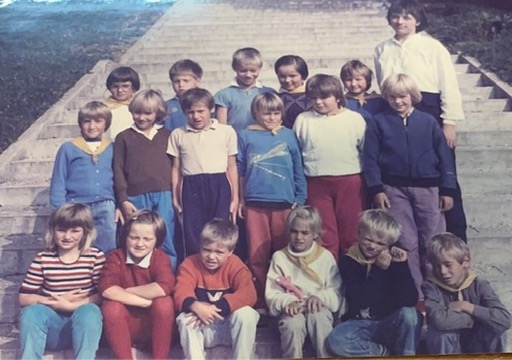
At first, that made me an outsider.
Eventually, it taught me how to adapt.
How to observe.
How to listen.
How to understand people who did not come from the same place I did.
And how to enter unfamiliar environments without losing myself.
At 16, I left home.
At 17, I decided I wanted to travel overseas and meet my biological father.
Nobody gave me the money.
Nobody handed me a plan.
I worked, saved, bought the ticket myself and travelled around the world alone.
I was looking for answers.
What I found was agency.
I learned that I could make a decision, create a plan, fund it myself and keep moving even when I did not know exactly how things would turn out.
That lesson stayed with me.
I do not spend much time waiting for permission.
Sometimes there is no playbook.
You make it as you go.
Being the outsider taught me how.
Capoeira
I found Capoeira after returning to Australia from Brazil at 17.
I already loved martial arts, but Capoeira was different.
It was movement, music, culture, language, discipline and identity all at once.
Over time, it became far more than something I practised.
It became part of how I understood the world.

When I later moved to Sydney to study acting, I worked whatever jobs I could find and eventually stumbled into sales.
At first, I was terrible at it.
Then someone told me to stop trying to sell products and start learning how to communicate with the person in front of me.
That changed everything.
I learned to listen.
To understand what mattered to people.
To communicate value.
Eventually, that led me into a corporate career at Telstra.
For a while, I thought I had made it.
A stable job.
A career.
A ladder.
Then I reached a point where I could see the future that path was leading toward, and I knew it was not the life I wanted.
So I chose Capoeira.
I went to my teacher and told him I believed I could help build the business.
He could not afford to pay me.
So I proposed something simple:
Let me work.
Let me prove I can create value.
If it works, we become partners.
It worked.
What began around Capoeira expanded into teaching, academies, cultural events, entertainment, administration, employees and systems.
Capoeira taught me discipline.
Timing.
Awareness.
Leadership.
It taught me how to move quickly without losing sight of what is happening around me.
And it strengthened something that is still very much part of me:
an instinct to stand in the corner of the underdog.
For me, Capoeira has always represented freedom.
The belief that whatever circumstances you were handed, you can become stronger than them.
And somewhere along the way, that instinct to look at something I cared about and ask, how do we build this properly?, led somewhere I never expected.
A college.
Building the Next Level
The College of Sports and Fitness did not begin with a grand plan.
It began with a problem.
I was seeing people working and teaching in fitness and martial arts who presented themselves as qualified but often lacked the proper training or accreditation.
That bothered me.
So the question became:
What would it take to build the proper pathway ourselves?
The answer became a college.
At the beginning, I was not thinking about scale, international expansion or acquisitions.
I was focused on solving the first problem properly.
Then that problem created the next one.
Accreditation.
Curriculum.
Compliance.
Student recruitment.
Trainers.
Facilities.
Operations.
International partnerships.
Every level introduced a new challenge.
And every challenge forced me to learn something I did not yet know.
Over time, what began as a solution to one problem became a nationally recognised education institution.
We became CRICOS-accredited.
We expanded our qualifications and programs.
We built international partnerships across dozens of countries.
We educated thousands of students.
And in 2013, Academies Australasia Group, a publicly listed education company, invested in the business as part of what would become my eventual exit.
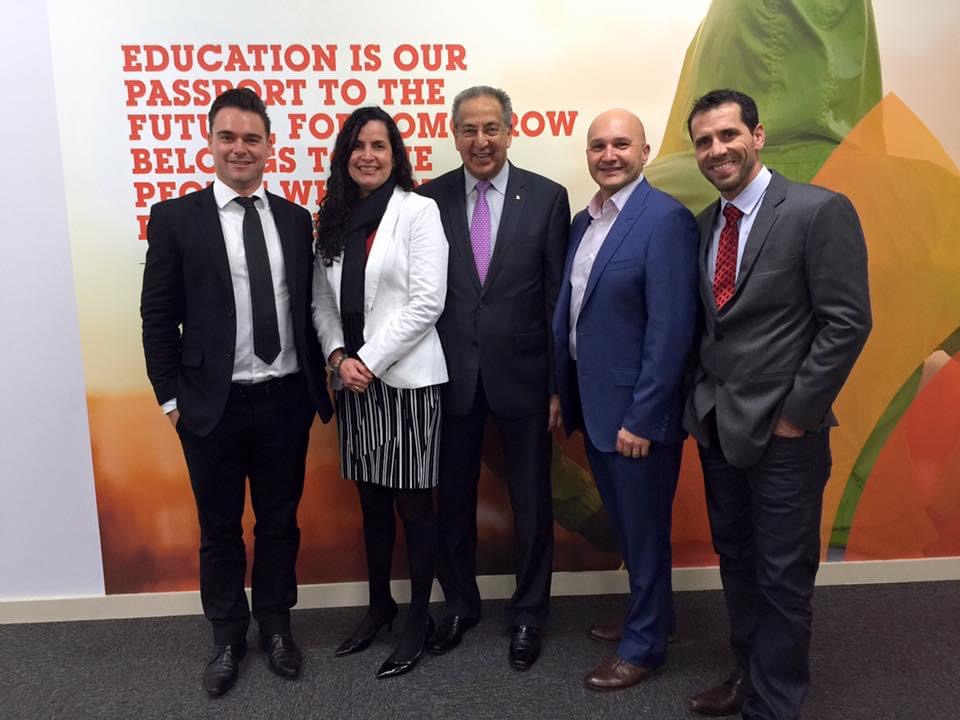
Looking back, I could never have designed the whole outcome from the beginning.
That was one of the biggest lessons.
You do not need to understand the entire journey before you start.
You need to understand the problem in front of you well enough to solve it.
Then you earn the right to solve the next one.
CSF taught me how to build something real.
How to operate inside regulation.
How to build teams and systems.
How to sell internationally.
How to work across cultures.
And how to create something that could grow beyond the founder.
Large outcomes are often created by solving smaller problems consistently enough that they compound.
You do not always need to know exactly where the road ends.
Sometimes you just need to know what the next level requires.
Then build that.
Starting Again
I do not believe we ever really start again.
Not from zero.
By the time we reach any meaningful turning point in life, we are carrying everything that came before.
Successes.
Mistakes.
Relationships.
Instincts.
Failures.
Skills.
Lessons that only make sense because we lived them.
So when I talk about starting again, I do not mean erasing the past.
I mean reaching a point in your life and asking:
Is this where I want to stay, or is there another version of my life I still want to discover?
There is no universal answer.
Growth does not have one definition.
For one person, the next chapter may mean building something larger.
For another, it may mean creating a quieter, more intentional life.
The scale is not the point.
The choice is.
At 36, I had already built a life in Australia that I was proud of.
Businesses.
Property.
Financial security.
Students.
Friends.
Family.
A reputation.
A network I understood.
And I was not unhappy.
That matters.
I was not running from a life that had failed.
I was looking at a life that had worked and asking whether it was still the fullest expression of what I wanted to become.
For me, the answer was no.
I wanted to reach more people.
I wanted a larger platform.
I wanted to find out what else I was capable of building.
At the time, I believed acting might be part of that path.
So I prepared.
Over roughly two years, I developed instructors who could take over my Capoeira classes, prepared my students, returned to acting school, worked on representation and researched visas.
Then I moved to Los Angeles.
From the outside, it looked like I was starting over.
But I was not.
I arrived with everything Australia had taught me.
How to sell.
How to build.
How to teach.
How to lead.
How to adapt.
What changed was the environment.
Different culture.
Different networks.
Different rules.
Different systems.
Over time, acting stopped feeling like the platform I thought it might become.
Whenever something feels misaligned, I stop.
I take a beat.
Sometimes I meditate.
Sometimes I visualize.
I try to imagine the future created by each path.
What happens if I keep going?
What happens if I change direction?
Who do I become at the end of each choice?
I do not always know the answer.
But I try not to let fear answer it for me.
Around that period, conversations with one of my roommates began pulling me toward technology and artificial intelligence.
Those conversations became ideas.
Those ideas became a company.
And eventually, that journey became Xrossworld.
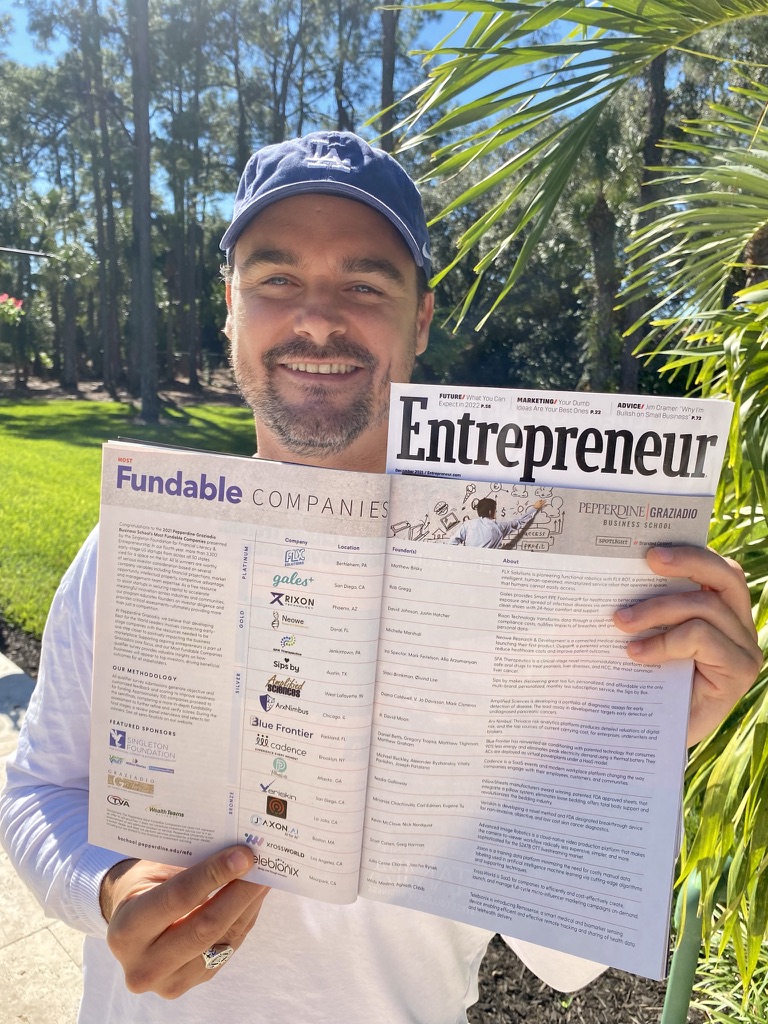
Looking back, the important part is not that I moved from Australia to America.
Or that acting became entrepreneurship.
The important part is that every chapter gave me something to carry into the next one.
That is why I do not think starting again is really about starting over.
It is about continuing from a new level of experience.
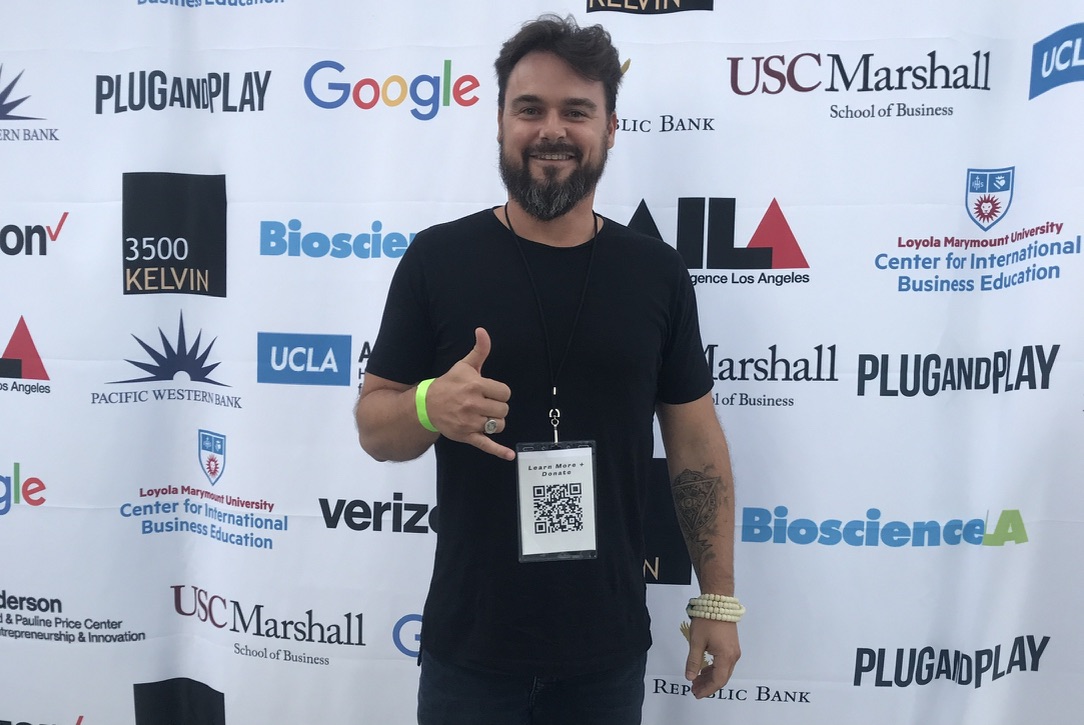
You take everything life has taught you and decide what you want to do with it next.
You may decide that where you are is exactly where you want to be.
That can be a powerful decision too.
But if somewhere inside you there is a sense that another version of your life is still waiting to be explored, then I think you owe yourself an honest question:
What is actually stopping me?
My version meant moving countries and eventually building another company.
Yours may look completely different.
That is the point.
You do not have to follow somebody else’s definition of ambition.
You only have to decide what the next version of your own life looks like.
And whether you are willing to pursue it.
You are never starting empty-handed.
You start with everything life has already taught you.
“Be ashamed to die until you have won some victory for humanity.”